Success message
Error message


Medical clinics often concentrate their marketing effort on generating enquiries and booking consultations.
That is only half the job.
A booked consultation does not automatically become an attended appointment, a treatment decision or revenue. Patients may forget the appointment, arrive without enough information, lose confidence, misunderstand the price, delay the decision or receive no meaningful follow-up afterwards.
When that happens, clinics often blame lead quality.
Sometimes the lead was poor. But many conversion problems are caused by the consultation journey itself.
The strongest medical clinics do not rely on persuasive sales techniques or pressure. They create a patient journey that removes uncertainty, establishes trust, explains treatment clearly and helps suitable patients make an informed decision.
This guide explains how clinics can improve consultation attendance and treatment conversion while protecting patient choice, clinical standards and long-term reputation.
Consultation conversion is the percentage of suitable patients who progress from a booked or attended consultation to the agreed next commercial or clinical step. Depending on the clinic, that step may be: Paying a deposit Booking treatment Accepting a treatment plan Completing diagnostic tests Scheduling surgery Beginning a programme Confirming an international treatment journey Returning for a second consultation Clinics should not reduce consultation conversion to a single number. The complete journey contains several separate rates: Enquiry-to-consultation booking rate Booking-to-attendance rate Attendance-to-treatment recommendation rate Recommendation-to-treatment acceptance rate Acceptance-to-completed treatment rate These stages reveal where the real problem sits. A clinic with many bookings but poor attendance does not have the same problem as a clinic with strong attendance but weak treatment acceptance. Combining everything into one conversion percentage hides the cause.


A patient can drop out for many valid reasons. They may not be clinically suitable. The timing may be wrong. The cost may exceed their budget. They may decide that the risks outweigh the benefits. A responsible clinic should never aim to convert every consultation. The commercial problem begins when suitable patients fail to progress because of avoidable friction. Common causes include: Weak communication before the appointment Long gaps between enquiry and consultation No clear explanation of what the consultation includes Generic reminder messages Confusing directions or joining instructions A rushed or inconsistent consultation Poorly explained risks and expected outcomes Price being introduced without enough context No clear next step Weak post-consultation follow-up Disconnected CRM and booking records These failures create uncertainty. Patients rarely say, “I did not convert because the process lacked structure.” They simply stop replying, postpone the decision or choose another provider.
The consultation does not begin when the patient enters the room or joins a video call. It begins when the appointment is booked. The period before the consultation shapes the patient’s expectations, confidence and commitment. A patient who understands the process is more likely to attend prepared and engage seriously. A strong pre-consultation journey should confirm:
Date and time Location or video link Clinician or consultant name Expected appointment length What will happen during the consultation What information the patient should prepare Whether photographs, records or test results are required Consultation fee and cancellation terms How to reschedule What happens afterwards The wording matters. A vague confirmation such as “Your appointment is booked” leaves too many questions unanswered. A useful confirmation reduces anxiety and gives the patient a clear sense of progress.


Missed consultations are not just diary problems. They consume staff time, delay other patients and waste part of the clinic’s acquisition cost. NHS England reported in March 2026 that 16 million GP appointments were not attended during 2025, equal to 4.3% of appointments. Its patient survey also found that forgetting and arriving late were common reasons for missed appointments. In July 2026, NHS England introduced minimum standards intended to improve planned-care communication, including clearer confirmation, better notice and regular updates. It also reported that text reminders used by The Walton Centre had helped release approximately 400 additional appointments per month. Private clinics differ from the NHS, but the operational lesson is relevant: clear, timely communication protects appointment capacity. A practical reminder sequence may include: Immediate booking confirmation Reminder several days before Reminder the day before Same-day reminder where appropriate Easy cancellation or rescheduling option Do not send identical reminders through every channel. Use the patient’s preferred method and keep the message useful. Include the appointment time, location, practitioner and rescheduling link. For high-value or complex consultations, a personal confirmation call may justify the staff time.
The longer a suitable patient waits, the more time they have to lose urgency, contact competitors or become distracted by conflicting information. Clinics should measure: Time from enquiry to first meaningful response Time from first response to consultation booking Time from booking to consultation Drop-off by waiting period A seven-day wait may be acceptable for one treatment and damaging for another. The clinic needs its own evidence. Where delays cannot be avoided, maintain communication. Send useful preparation information and confirm that the patient has not been forgotten. Silence creates doubt.


Healthcare decisions involve risk, identity, money and uncertainty. Patients assess more than the clinician’s technical credentials. They judge whether the organisation appears consistent, transparent and safe. Trust can be strengthened before the consultation through: Clear practitioner profiles Verifiable qualifications Honest explanations of suitability Realistic treatment information Transparent pricing principles Clear aftercare information Genuine patient experiences Accessible policies Professional communication Avoid flooding patients with promotional content. The goal is not to convince them before the consultation. It is to help them arrive informed enough to have a useful discussion. Medical tourism clinics carry an even greater trust burden. International patients must evaluate clinical quality, authorisation, communication, travel arrangements and aftercare from a distance. Turkey’s Ministry of Health maintains an official list of healthcare providers authorised for international health tourism. Clinics targeting overseas patients should make relevant authorisation and credentials easy to verify rather than expecting patients to search for them independently.

A weak consultation often becomes a rehearsed presentation. The consultant explains the clinic, treatment and price before fully understanding what the patient wants. A stronger consultation follows a diagnostic structure. 1. Establish the patient’s reason for enquiring Ask why they are considering treatment now. This reveals urgency, expectations and emotional context. 2. Understand the desired outcome Patients may ask for a treatment when their real concern is different. Clarify what they want to change, improve or resolve. 3. Explore previous experience Ask about: Previous treatments Previous consultations Current medical advice Concerns about earlier outcomes Reasons for delaying action
4. Assess suitability Clinical suitability must take priority over commercial interest. Where the person is unsuitable, explain why and provide an appropriate alternative or next step where possible. 5. Identify decision factors Understand what matters most: Clinical outcome Safety Recovery Practitioner experience Timing Price Financing Travel Aftercare
6. Explain options clearly Present the relevant choices, trade-offs and limitations. 7. Agree the next step The patient should leave knowing what happens next, even if they are not ready to book. This structure creates a conversation rather than a pitch.
Good questions uncover motivation and uncertainty without manipulating the patient. Useful questions include: What made you start looking into this now? What result are you hoping to achieve? What have you already researched? Have you spoken with another provider? What concerns you most about the treatment? What would make you feel comfortable proceeding? Is there a particular timeframe you are working towards? Who else is involved in the decision? What information do you still need? Avoid aggressive closing questions or scripts designed to corner the patient. Healthcare consultations are not conventional product sales calls. The objective is informed progress, not forced agreement.

Patients need to understand what they are paying for. Simply stating the price can make the clinic appear expensive because it gives the patient no context. The value explanation may include: Practitioner experience Diagnostic process Treatment planning Technology or materials used Clinical facilities Safety standards Follow-up appointments Aftercare Revision or support policies Expected patient responsibilities This should not become a defensive monologue. Explain the elements that are relevant to the patient’s priorities. Do not imply that a higher price automatically means a better clinical outcome. Do not exaggerate likely results or minimise risks. Strong conversion comes from clarity, not inflated promises.

Avoid hiding the price until the final minutes of the consultation. Patients may interpret evasiveness as a lack of transparency. Where prices depend on clinical assessment, explain: The likely range What determines the final price What is included What is excluded When payment is due Whether deposits are refundable Whether financing is available When a patient says the treatment is expensive, do not immediately discount it. First understand the objection. They may mean: They did not expect the price They are comparing a cheaper provider They need payment flexibility They do not yet understand the value They are unsure about the treatment The timing is wrong They cannot afford it These require different responses. Automatic discounting can damage trust and train patients to negotiate.


Payment plans can make suitable treatment accessible, but they should not be used to pressure patients into decisions they cannot support. Explain: Total cost Deposit Repayment term Interest or fees Eligibility conditions Cancellation consequences Whether financing comes from a third party Make sure the financial discussion remains separate from clinical suitability. A patient should not be encouraged to proceed solely because finance approval is available. Give Patients Space to Decide Some treatments justify a cooling-off period, further research or a second consultation. A clinic that pressures hesitant patients may improve short-term bookings but create cancellations, complaints and reputational damage. Give the patient a clear decision path: Book immediately if ready Reserve a provisional date where appropriate Arrange another consultation Complete tests or assessment Review written information Receive a follow-up call Decline treatment The next step should be explicit, even when the patient is undecided.
Many clinics invest heavily in obtaining and conducting consultations, then rely on one generic follow-up message. That wastes the work already completed. The follow-up should reflect what happened during the consultation. A useful message may include: Thank-you and acknowledgement Summary of agreed goals Recommended treatment or next step Relevant preparation or aftercare material Price or proposal Answers to outstanding questions Named contact Clear booking method Agreed follow-up date Do not send sensitive clinical details through an unsuitable channel. Use secure systems and appropriate consent. Canada’s proposed Connected Care for Canadians Act, introduced in February 2026, highlights the wider importance of secure information exchange and reducing fragmentation between healthcare systems. While it addresses health information infrastructure rather than clinic sales processes, the operational principle applies: disconnected information creates poor experiences and weak coordination. Your CRM, consultation notes, booking platform and follow-up process should not operate as separate worlds.


“Not ready today” does not always mean “not interested.” Create clear categories for patients who: Need more information Need time Are comparing providers Are arranging finance Are waiting for a suitable date Require medical clearance Have stopped responding Have declined Each category needs a different follow-up approach. A patient waiting for test results should not receive the same message as someone comparing price. Set a specific follow-up date rather than leaving the record open indefinitely. Longer-term nurturing may include: Educational content Practitioner explanation Treatment preparation guide Financing information Relevant patient story Invitation to a second consultation The communication should help the patient decide. It should not repeatedly ask, “Are you ready to book?”
Clinics often hold databases of patients who attended consultations but never progressed. These records can reveal both opportunities and process failures. Before contacting them: Confirm the lawful basis for communication Respect opt-outs Review clinical suitability Check the previous outcome Exclude complaints and sensitive cases Segment by treatment and timeframe A reactivation message should acknowledge the previous enquiry and offer a useful next step. Do not pretend the conversation happened recently if it did not.


Start with a clear definition. Consultation booking rate Booked consultations divided by qualified enquiries. Attendance rate Attended consultations divided by booked consultations. Recommendation rate Patients offered a treatment plan divided by attended consultations. Treatment acceptance rate Accepted treatment plans divided by patients offered treatment. Completion rate Completed treatments divided by accepted treatment plans. Time to decision Average or median time between consultation and treatment acceptance. Revenue per attended consultation Revenue attributed to completed treatment divided by attended consultations. Do not compare every practitioner using raw conversion rate alone. Differences may be caused by treatment type, price, lead source, suitability criteria or case complexity. Review data by: Practitioner Treatment Lead source Location Consultation type Patient market Waiting period Follow-up status The goal is to identify process gaps, not create pressure to recommend unnecessary treatment.
Treating every consultation as identical Different treatments and patient groups require different preparation and decision journeys. Measuring only bookings Booking volume hides attendance and treatment conversion problems. Focusing only on the consultant Conversion depends on marketing, reception, booking, reminders, clinical experience, pricing, follow-up and aftercare. Using generic scripts A script can provide structure, but rigid wording makes the conversation feel transactional. Introducing price without context Patients need to understand the recommendation and what is included. Discounting too early This may avoid the real objection and weaken perceived value. Applying pressure Pressure can create cancellations, complaints and poor-fit patients. Failing to document outcomes If every non-conversion is recorded as “lost,” the clinic learns nothing. No owner for follow-up When everyone is responsible, nobody is responsible.


Week 1: Measure the current journey Collect the previous 60 to 90 days of data. Review: Enquiries Qualified enquiries Bookings Attendance Treatment recommendations Accepted plans Completed treatments Revenue Response and waiting times Identify where the largest drop occurs. Week 2: Fix communication Review: Booking confirmations Reminder timing Preparation information Consultation descriptions Cancellation options Follow-up templates Make the language clear, specific and patient-centred.
Week 3: Improve consultation structure Create a standard framework covering: Motivation Desired outcome History Suitability Concerns Options Risks and limitations Price Next step Train staff to use the structure without sounding scripted. Week 4: Strengthen follow-up and reporting Define CRM stages. Assign responsibility for each follow-up. Create categories for undecided patients. Start weekly reporting by treatment and source. Then test one improvement at a time. Do not change the reminder sequence, consultation structure, pricing presentation and follow-up cadence simultaneously. You will not know what caused the result.
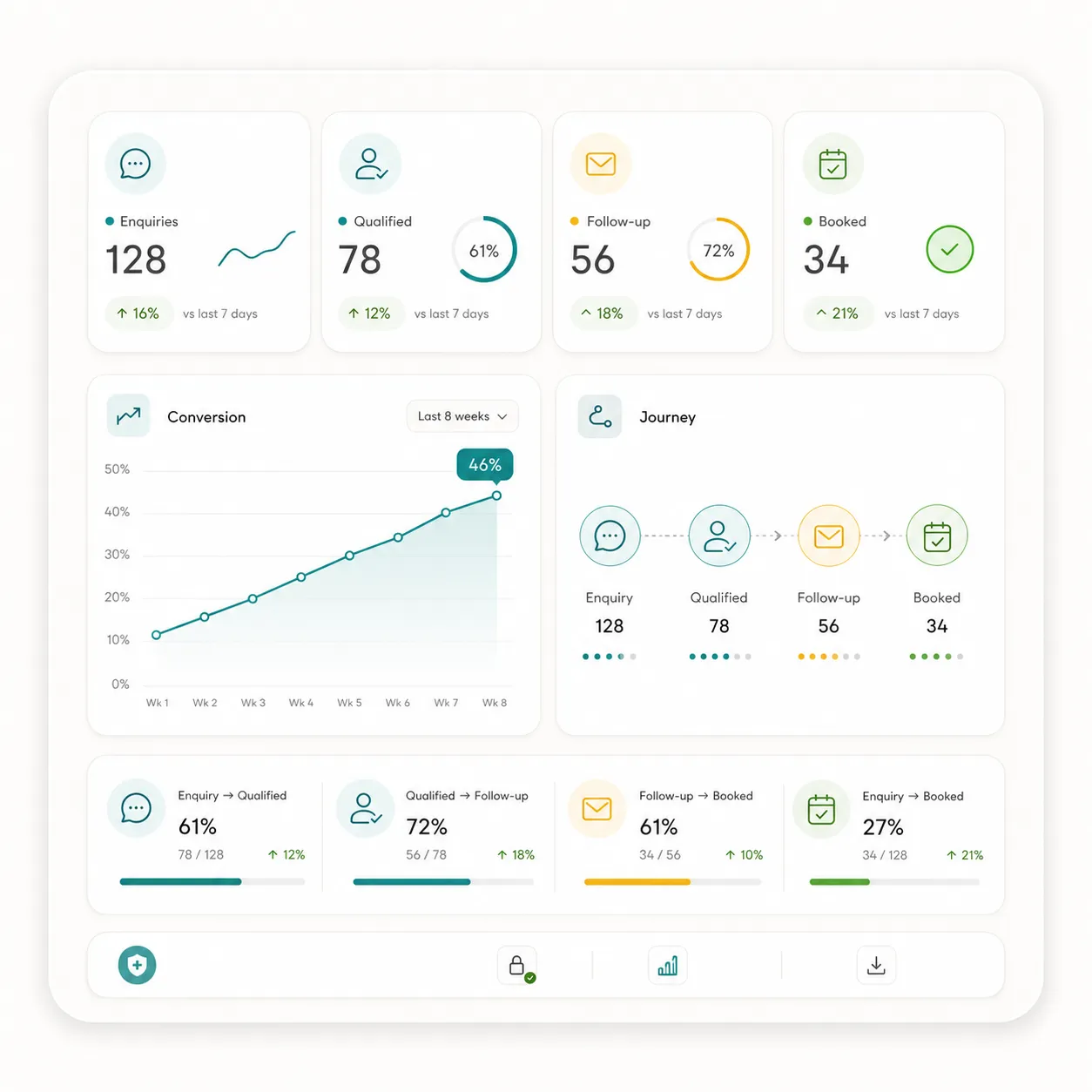
The strongest consultation conversion strategies do not rely on a persuasive individual. They create consistency across the complete patient journey: Enquiry → Qualification → Booking → Preparation → Attendance → Consultation → Decision → Treatment → Follow-up Every stage should reduce uncertainty and provide a clear next step. Some patients should not progress. That is part of responsible healthcare. The objective is to prevent suitable patients from being lost because the clinic responded slowly, communicated poorly or failed to follow up. More leads will not solve those problems. They will send more demand into the same weak process.

If your clinic books consultations but too few patients attend, proceed or complete treatment, Clinivaro can help identify where the journey is breaking down. Our 3-Point Growth Audit reviews: Acquisition Follow-up Conversion We examine the path from first enquiry through consultation and commercial outcome, then identify the gaps most likely to be costing your clinic qualified opportunities. Request your 3-Point Growth Audit and find out whether your clinic needs more enquiries or a stronger system for converting the demand it already has.
NHS England - NHS Urges ‘Tap the App’ as One in Four Miss Appointments NHS England - New Minimum Standards for Patient Communications Health Canada - Connected Care for Canadians Act Republic of Türkiye Ministry of Health - Authorised International Health Tourism Providers
These are all official sources and directly support the article’s 2026 claims.